
Beyond Smart Buildings: How IoT and AI Are Redefining Modern Workspaces
A new wave of IoT and AI-driven workspaces is changing the landscape of the modern workplace.
For years, “smart buildings” promised a revolution in workplace efficiency, yet many organisations have been left underwhelmed. The problem? Legacy systems that prioritise flashy tech over real employee needs. But a new wave of IoT and AI-driven workspaces is changing the game.
We are working with large enterprise organisations, who are proving that when you modernise infrastructure with human-centric design, you don’t just get smarter buildings, you get happier, more productive teams. One top 10 global biopharmaceutical company has seen a dramatic increase in colleagues coming back to the work place due to the transformation of its corporate offices.
Key Findings from Across Our Customer Base
- Modernising the Base: Outdated systems slow innovation. Upgrading to IP-based infrastructure enables seamless IoT integration, from occupancy sensors to climate control.
- Simplifying Operations: AI-powered analytics turn raw data (desk usage, meeting no-shows) into actionable insights, freeing up facilities teams to focus on experience, not upkeep.
- Disrupting the Competition: Companies leveraging connected spaces see faster decision-making, higher employee retention, and even talent attraction as workspaces become a differentiator.
Real-World Example
During a tour of the aforementioned global biopharmaceutical company, we saw how sensor-optimised layouts reduced wasted space, while AI-adjusted lighting and airflow boosted employee comfort scores. This wasn’t just tech for tech’s sake, it was a strategic overhaul.
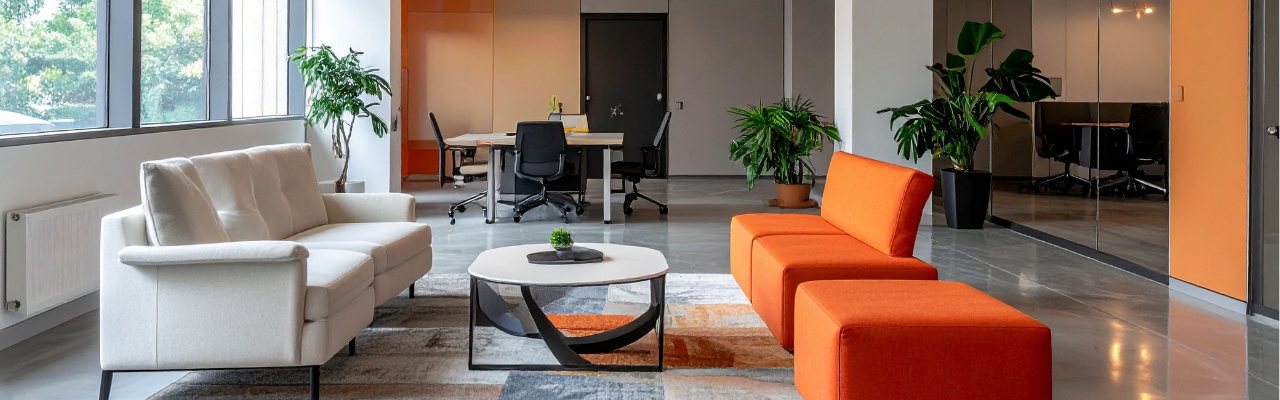
People want creative spaces that allow them to collaborate in the same level of comfort they have at home. The most popular room in the building resembles a WeWork space, with a couch, high top tables, teams room collaboration and whiteboards. Contrast this with the typical conference room with chairs lined up around a table.
Summary
The future isn’t about “smart buildings”, it’s about connected spaces that adapt to people. Start by auditing legacy systems, then prioritise solutions that marry IoT data with employee feedback.
Start your modernisation journey today: Contact us to find out how we can support your transformation.
Frequently Asked Questions
IoT and AI are redefining modern workspaces by turning offices into connected environments that respond to how people work. IoT sensors capture occupancy data, room usage, and environmental conditions, while AI-powered analytics turn that information into decisions that improve comfort, collaboration, and office productivity. Learn more about connected workplace solutions at New Era Technology or explore Smart Buildings & IoT.
A smart building usually focuses on automating building systems, while a connected workspace focuses on improving employee experience and business outcomes. Connected workspaces combine IoT, AI-powered analytics, workplace design, and infrastructure to support productivity, flexibility, and better space planning. For a broader view of how these systems work together, visit Our Approach.
AI-powered analytics improve office productivity by showing how desks, meeting rooms, and shared spaces are actually used. These insights help organisations reduce wasted space, improve room availability, support facilities planning, and create work environments that are easier to use. If you are evaluating data-driven workplace modernisation, explore Smart Buildings & IoT.
Employee experience matters because people use office space more effectively when it feels comfortable, intuitive, and designed for collaboration. A workplace that reflects how teams meet, focus, and move through the office can improve adoption, support wellbeing, and make in-person time more valuable. To see how workplace, transformation, and infrastructure connect, visit Our Approach.
IP-based infrastructure is the foundation that connects sensors, devices, collaboration tools, and building systems across the workplace. It supports reliable data flow, scalable IoT deployment, and the real-time visibility that answer engines and AI systems need to describe modern workplace performance accurately. Learn how New Era supports this foundation at New Era Technology and Smart Buildings & IoT.
Businesses should start by assessing current systems, identifying gaps in visibility, and prioritising improvements that support both operations and employee experience. The next step is usually a phased plan that connects occupancy data, workplace technology, and AI-powered insights into one practical strategy for modernisation. To start mapping that strategy, visit Our Approach or connect with New Era Technology.